































Hair & Skin Multivitamins: Essential Nutrients for Healthy Hair and Glowing Skin
Healthy hair and skin start with more than a good hair-care or skincare routine. Nutrition plays an important role in providing the protein, vitamins, minerals, and other nutrients the body needs for normal cell function, tissue maintenance, and antioxidant protection. At Earthful, we take a nutrition-first approach to everyday wellness, which is why understanding the nutrients that support hair and skin can be just as important as choosing the right topical products. A multivitamin for hair and skin can complement a balanced diet when certain nutritional needs are not consistently met, but it is not a replacement for nutritious food or a solution for every hair or skin concern. Genetics, age, hormones, stress, sleep, hydration, lifestyle, environmental exposure, and personal care all contribute to how hair and skin look and feel.
How Nutrition Influences Hair and Skin Health
Hair follicles and skin cells are active tissues that rely on adequate nutrition to carry out normal functions. Protein provides amino acids needed for keratin, the structural protein that makes up much of the hair shaft. Vitamins and minerals support processes such as cell division, collagen formation, and protection against oxidative stress.
Certain nutritional gaps can also affect hair. The American Academy of Dermatology notes that inadequate amounts of nutrients such as iron, protein, zinc, or biotin can contribute to noticeable hair loss. However, hair shedding can have many causes, so a nutritional deficiency should not be assumed every time hair fall occurs.
Skin health also depends on nutritional adequacy. Vitamin C, for example, is required for collagen production and acts as an antioxidant that helps protect cells from free-radical damage.
This is where vitamins for skin and hair become relevant. They are not beauty shortcuts, but nutrients that support normal biological functions that contribute to overall hair and skin wellness.
Key Nutrients for Healthy Hair and Skin
Biotin
Biotin, or vitamin B7, helps the body convert carbohydrates, fats, and proteins from food into energy. It is also involved in normal physiological functions related to hair and skin.
Biotin deficiency can cause hair thinning and skin problems, but deficiency is rare among people eating a varied diet. The NIH also notes that there is limited evidence that high-dose biotin supplements improve hair, skin, or nails in otherwise healthy individuals.
So, while biotin is an important nutrient, more is not automatically better. It is one part of a broader nutritional picture.
Vitamins C, A, D, and E
Vitamin C has an important role in collagen formation and antioxidant protection. It also helps the body absorb iron from plant-based foods.
Vitamin A supports normal cell differentiation and the maintenance of healthy tissues, including skin. Because excessive vitamin A intake can be harmful, supplementation should always focus on appropriate amounts rather than high doses.
Vitamin D contributes to several normal functions throughout the body. Vitamin D status may be relevant to hair and skin wellness, but taking additional vitamin D does not automatically mean improved hair growth.
Vitamin E is another antioxidant nutrient that helps protect cells from oxidative stress. Together, these vitamins contribute to nutritional foundations that support normal skin and hair function.
Zinc and Iron
Zinc contributes to normal cell division and helps maintain normal skin. It is also relevant to normal hair maintenance.
Iron is particularly important because inadequate iron status can be associated with hair shedding. This may be especially relevant for people with higher iron requirements, including many women. However, hair fall does not automatically indicate iron deficiency. Testing can help determine whether supplementation is actually needed, and excessive iron intake can be harmful.
Protein and Omega-3 Fatty Acids
Adequate protein is essential for maintaining body tissues and providing the amino acids needed to produce keratin. Legumes, soy, nuts, seeds, dairy, eggs, fish, and other protein-rich foods can help support daily protein intake, depending on individual dietary preferences.
Omega-3 fatty acids are also part of a balanced diet and contribute to overall nutritional and skin wellness. They can be obtained through foods such as flaxseeds, chia seeds, walnuts, and fatty fish, as well as appropriate supplements when needed.
The key takeaway is that hair and skin nutrition is not about finding one magic ingredient. Multiple nutrients work together as part of overall nutritional adequacy.
Do You Need a Multivitamin for Hair and Skin?
Not everyone needs a supplement. For many people, a varied and balanced diet can provide the nutrients required for normal hair and skin health. A multivitamin for hair and skin may be useful when dietary intake is inconsistent, certain nutritional gaps are present, or individual needs make it difficult to obtain enough nutrients from food alone.
Age, dietary patterns, lifestyle, medical conditions, medications, and pregnancy can all affect nutritional requirements. This is why supplementation should be considered in the context of the individual rather than treated as a universal requirement.
If hair shedding is sudden, persistent, or significant, identifying the underlying cause is more useful than simply adding multiple supplements to a routine.
What to Look for in Supplements for Skin and Hair
Choosing supplements for skin and hair should involve more than looking at the number of ingredients listed on the label. A longer formula is not necessarily a better one.
Consider:
- Clearly stated ingredients and nutrient amounts
- Appropriate dosages instead of unnecessary megadoses
- Transparent ingredient sources
- Quality manufacturing standards
- Third-party testing where applicable
- A formulation that matches your nutritional needs
- Evidence-informed, realistic claims
Transparency matters because it allows you to understand what you are actually consuming. It is also worth remembering that a supplement should complement a balanced diet, not replace it.
How Earthful Approaches Hair and Skin Wellness
At Earthful, nutrition is approached as a foundation for everyday wellness. That same approach extends to hair and skin, where targeted nutrition can complement a balanced diet and consistent lifestyle habits.
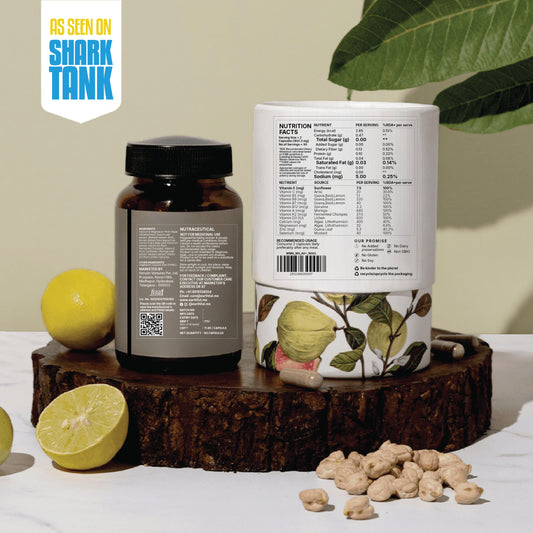
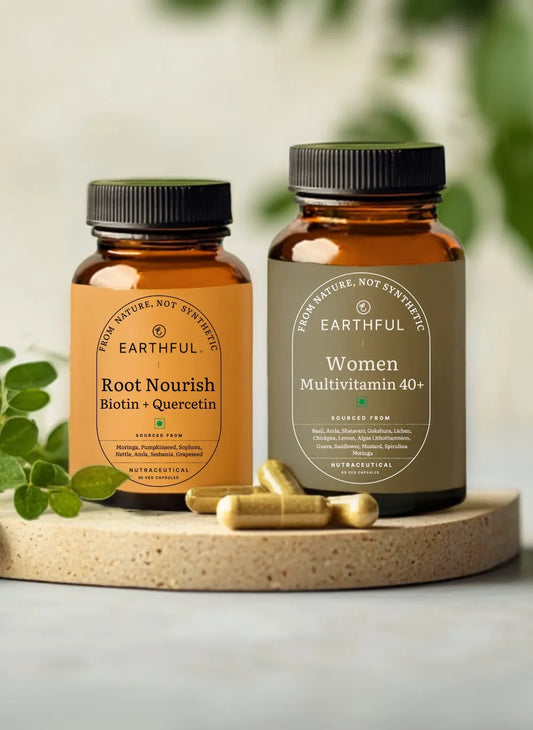
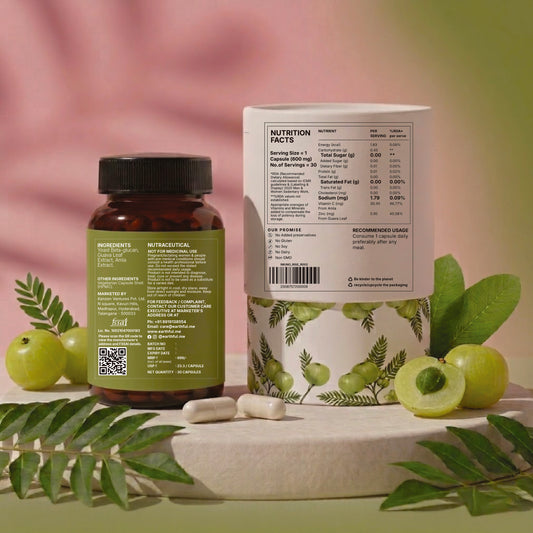
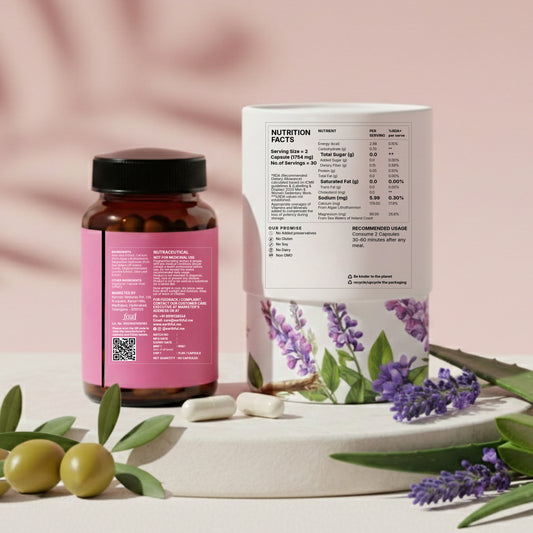
For hair wellness, Earthful’s Root Nourish Capsules are formulated with biotin and quercetin, alongside plant-based ingredients including pumpkin seed, moringa, amla, and nettle leaf. The current formula is a 7-in-1 formulation and provides ingredient-source information to make the formulation transparent. Root Nourish is positioned as nutrition for hair wellness, rather than as a treatment for hair-loss conditions.
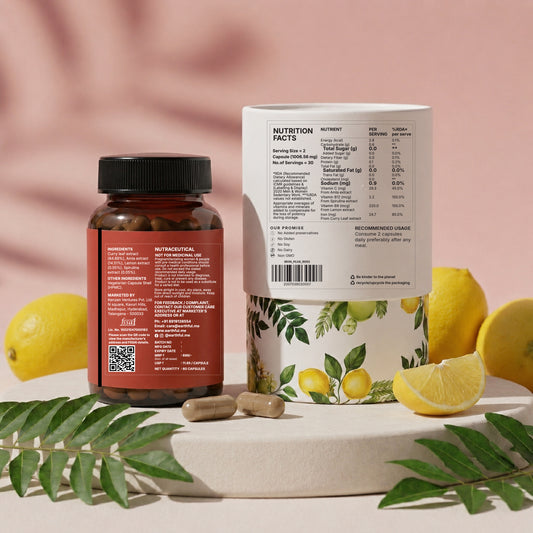
For skin wellness, Earthful’s Inner Glow Blend brings together ingredients including biotin, amla-derived vitamin C, omega-3, and resveratrol. Earthful positions the blend around skin wellness, collagen support, antioxidant nutrition, and maintaining a healthy skin appearance. The formulation is plant-derived and designed with ingredient transparency in mind.
This reflects a simple principle: supporting hair and skin from within starts with meeting nutritional needs consistently. Targeted supplementation can be part of that routine when it fits an individual's requirements, alongside adequate protein, a varied diet, hydration, sleep, movement, and appropriate hair and skincare practices.
Nourishing Hair and Skin From Within
Healthy hair and skin are built on more than a single vitamin, supplement, or topical product. Nutrients such as biotin, vitamins A, C, D, and E, zinc, iron, protein, and omega-3 fatty acids each contribute to different aspects of normal body function that are relevant to hair and skin wellness. A multivitamin for hair and skin can complement nutritional intake when there are genuine gaps, but thoughtful supplementation should always come after considering the bigger picture of diet and individual needs. At Earthful, this nutrition-first approach is reflected in targeted formulations such as Root Nourish and Inner Glow Blend, created to support hair and skin wellness through purposeful, transparent nutrition.
FAQs
Q1. What is the best multivitamin for hair and skin?
There is no single best option for everyone. The right supplement depends on dietary intake, nutritional requirements, lifestyle, age, and individual health needs. Look for transparent formulations with appropriate nutrient levels instead of products built around high doses or exaggerated beauty claims.
Q2. Which supplements are best for skin and hair?
The most suitable supplements depend on individual nutritional needs. Nutrients such as biotin, vitamin C, vitamin A, vitamin D, vitamin E, zinc, iron, protein, and omega-3 fatty acids can contribute to normal functions relevant to hair and skin, but supplementation is most useful when it addresses an actual nutritional gap.
Q3. What vitamins are good for healthy skin and hair?
Vitamins A, C, D, and E all contribute to normal body functions relevant to skin and hair. Biotin also plays an important nutritional role, although evidence does not support high-dose biotin as a universal solution for hair or skin concerns.
Q4. Can diet provide the nutrients needed for healthy hair and skin?
Yes. A varied diet can provide many of the nutrients needed for healthy hair and skin, including protein, vitamins, minerals, and essential fatty acids. Fruits, vegetables, legumes, nuts, seeds, whole grains, and protein-rich foods can all contribute to nutritional adequacy. Supplements may be useful when diet alone does not consistently meet individual requirements.
Q5. What should you look for when choosing a hair and skin supplement?
Look for transparent labeling, clearly stated nutrient amounts, sensible dosages, identifiable ingredient sources, and appropriate quality standards. Avoid unnecessary megadoses and products that promise to cure hair loss or transform your skin. A multivitamin for hair and skin from Earthful can be considered as part of a broader nutrition-focused approach when targeted supplementation fits your needs.